- About Ability
- Product & ServicesImage and Content Creation
- Core Competencies
- Investor Relations
- CareersLife at ABILITY
- ESG
- Support
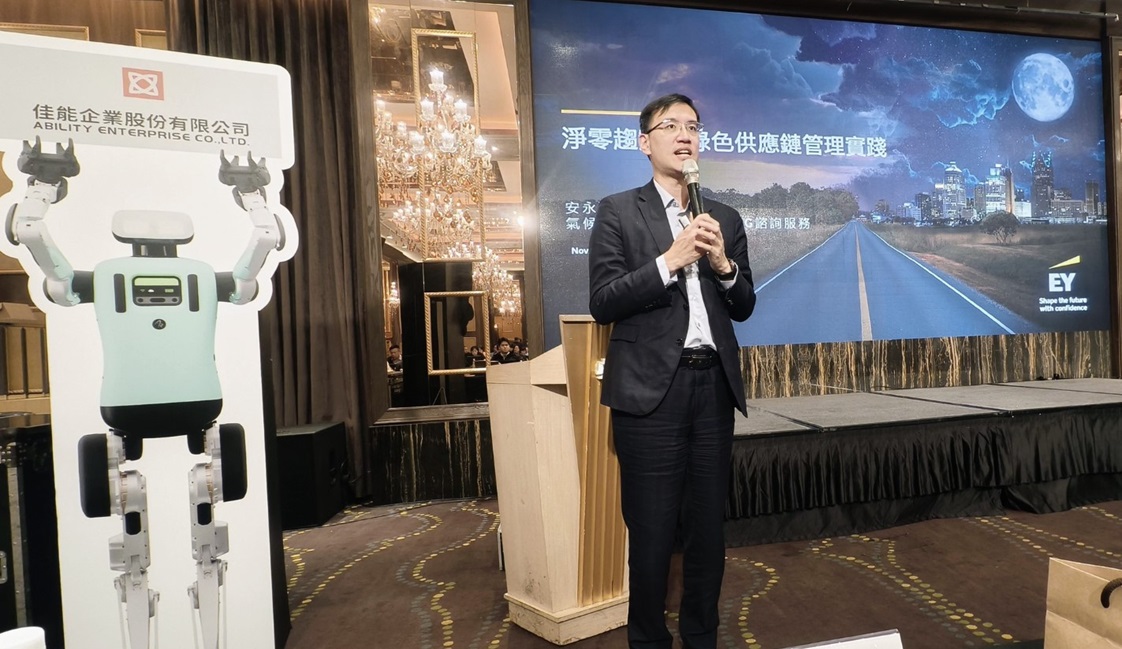
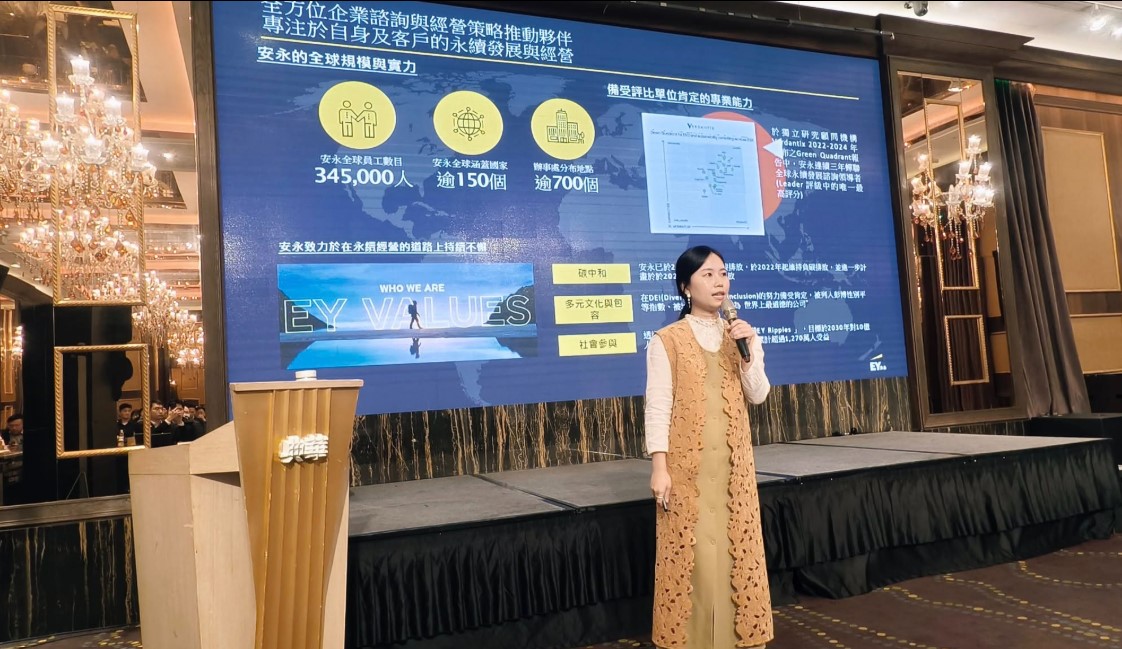
Facing the global challenge of climate change, ESG (Environmental, Social, and Governance) has become an essential prerequisite for corporate survival. Ability Enterprise recently convened over 100 elites from 64 suppliers for the "Green Supply Chain ESG Co-Learning Workshop."
The company invited Accountants Roger Tseng and Associate Director Amy Hu from Ernst & Young Taiwan to serve as speakers. Through the curriculum, the workshop aimed to establish a consensus around the theme of "Net-Zero Trend, Collaborative Learning and Creation, Green Future," hoping to deepen industrial cooperation, build a resilient, low-carbon supply chain, and collectively move towards the 2050 net-zero emissions goal.
In his opening remarks, Mr. John Lin, Special Assistant to the Chairman of Ability Enterprise, emphasized: "ESG is not just a responsibility; it is an opportunity for transformation." In addition to its own initiatives, Ability Enterprise is committed to advancing hand-in-hand with its supplier partners in the ESG domain.
Since the establishment of its ESG Committee in 2022, the company has actively invested in talent development. Currently, 21 employees have obtained the Ministry of Economic Affairs' ESG iPAS Certification, with a remarkable 70% of these certificate holders hailing from the Supply Chain Management Department. These strategic procurement personnel have transformed into "Green Supply Chain Ambassadors." Beyond controlling cost and quality, they possess professional sustainability literacy, ensuring alignment with suppliers and the successful implementation of green procurement.
The workshop focused on five core issues, including Carbon Footprint, Green Supply Chain, DEI (Diversity, Equity, and Inclusion) Inclusive Future, Circular Economy, and Evaluation Tools.
The speakers provided an in-depth analysis of international labor human rights standards. Furthermore, concerning the Environmental (E) and Governance (G) pillars, they dissected key topics such as:
• CBAM (Carbon Border Adjustment Mechanism) Carbon Tariffs
• Carbon Trading
• SBTi (Science-Based Targets initiative) Goals
Practical discussions explored the difficulties SMEs face in implementation, the need to work with manufacturers to identify actionable execution points, and the significant value of mitigating operational risks and achieving business growth after implementing ESG and carbon reduction strategies.
By launching this co-learning workshop, Ability Enterprise, through practical case sharing and interactive discussion, expects to collaborate with its suppliers across the product production chain to seek and create energy-saving and carbon-reducing green products.
Ability Enterprise will continue to deepen its connection with partners, implement green procurement through concrete actions, and jointly seize the opportunities presented by the green economy with its suppliers.